
Overview
The Astralis Instrumentation Consortium (Astralis), previously known as the Australian Astronomical Optics Consortium, was formally established in June 2018. The Board provides representation and input from the broader Australian astronomy community, ensuring that Astralis’ strategy and activities are closely aligned with the interests of the national effort in astronomy.
Governance info
Astralis is a joint venture established under the governance of the three participating universities. Operations are conducted within our institutional governance frameworks. The Astralis Management Committee provides oversight of the daily operations.
The Astralis Advisory Board, operating independently and without institutional conflict of interest, provides high level strategic guidance and advice to the Astralis Management Committee, contributing to the Consortium’s long-term success, sustainability and national impact.
Astralis Advisory Board Members

Dr Jane Fitzpatrick – CEO ANFF Ltd
ANFF – Australian National Fabrication Facility – is one of Australia’s research infrastructure providers established under the Australian Government’s National Collaborative Research Infrastructure Strategy (NCRIS). ANFF currently operates 8 Nodes across 21 sites to provide access to state-of-the-art micro fabrication and nano fabrication facilities for both academic and industry researchers.
Before her various roles within ANFF at the Node level and now with the National office, Jane previously held positions within academia, the MedTech start-up space and industry focused research entities, as well as Board positions for Women in Technology.
Dr Fitzpatrick led ANFF’s Queensland node for a number of years, joined the HQ team as its Chief Operating Officer, and has been the CEO since 2021. As the CEO, her responsibilities include ensuring the network performs as a cohesive and collaborative community, and maximising ANFF’s ability to support projects from academia and industry.
Jane holds a PhD in Applied Immunology and a degree in Biotechnology, and she has added technical expertise in many areas, including micro and nanofabrication, throughout her career.

Dr. Erika Hamden – Ted Fellow, Director of Arizona Space Institute (University of Arizona)
Dr. Erika Hamden is a tenured professor of astrophysics at Steward Observatory at the University of Arizona. As a leader in the field of space astrophysics, she has created programs to teach early career scientists how to develop their own space missions (NASA’s PI Launchpad). She is the PI of Hyperion, a MIDEX Mission Concept, and the PI of Eos, a SMEX mission Concept to be proposed in 2026. She is the deputy principal investigator of Aspera, a NASA Pioneers SmallSat telescope in development for launch in 2026. She is also the Institutional PI of FIREBall-2, a UV multi-object spectrograph Balloon mission.
Dr. Hamden was awarded a Nancy Grace Roman Technology Fellowship for her detector work in 2016. She received a PECASE award in 2019 and has received numerous other awards from NASA. She is a TED Fellow, a AAAS If/then Ambassador, an aspiring astronaut, and a social media influencer.
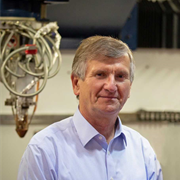
Dist. Prof Milan Brandt
Prof. Brandt is a nationally recognised leader in advanced manufacturing, with more than three decades of experience spanning research, industrial collaboration, and technology translation. His career is distinguished by his ability to bridge research and industry, leading large-scale collaborative programs that accelerate the adoption of cutting-edge manufacturing technologies. He has played a central role in shaping Australia’s capability in additive manufacturing, materials processing and laser-based manufacturing technologies, working closely with industry partners across defence, aerospace, medical technologies and advanced manufacturing sectors.

Dr Alexander Cooke – CEO AAL
Dr. Cooke is the CEO of AAL – Astronomy Australia Limited – a not-for-profit company, limited by guarantee, whose members are Australian universities and research organisations with a significant astronomical research capability.
Across more than two decades in senior roles spanning Australian Government and national research agencies, Dr. Cooke has been instrumental in facilitating the delivery of high impact collaborative science at scale. He has overseen and supported major national science initiatives, including leading the CSIRO Missions Program, the ON Innovation Program, strengthened research infrastructure investment and advanced strategic partnerships with key astronomy stakeholders. Dr Cooke also led the delivery of the International Conference on Research Infrastructure (ICRI) 2024 which Australia hosted in partnership with the European Commission.

Dr. Steve Frisken – Independent
FTSE, FOSA
Fellow abbreviations
- FTSE: Fellows of the Australian Academy of Technology and Engineering
- FAICD: Fellows of the Australian Institute of Company Directors
- FAA: Fellow of the Australian Academy of Science
- FRAS: Honorary Fellow of the Royal Astronomical Society
- FAAAS: Fellow of the American Association for the Advancement of Science
- FOSA: Fellow of the Optical Society
- FAIP: Fellow of the Australian Institute of Physics
- FASA:Fellow of the Astronomical Society of Australia